COVID-19 offered doctors, nurses, and hospitals many challenges throughout the pandemic, especially when it came to supply and demand. An overwhelming amount of patients became ill with the contagious disease. Manufacturers and distributors experienced shortages in labor and material. That made it difficult to keep up with the needs of medical providers.
In the past, it made more sense to go to a distributor. However, now many wonder: what is the difference between buying from a distributor and buying directly from a manufacturer?
The past year made it apparent that the hospital supply chain needed resiliency in the face of a global disaster. Many involved in the supply chain are now considering the best way to keep their facilities in stock. In the past, it made more sense to go to a distributor. However, now many wonder: what is the difference between buying from a distributor and buying directly from a manufacturer?
Each choice has its own set of advantages and disadvantages.
Buying Through Distributors for Supply Chain
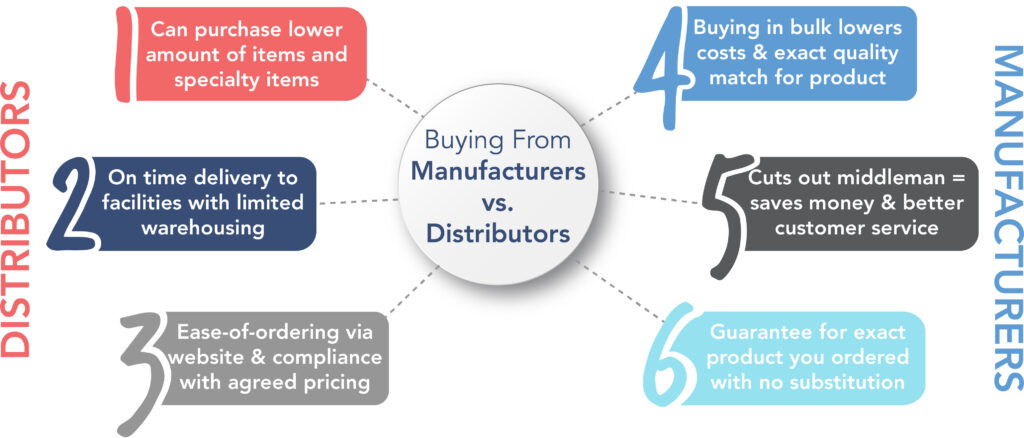
In the past, hospitals typically purchased products in bulk from distributors. This system offered some advantages, particularly when it came to purchasing lower numbers of items or finding specialty items that might not have been available elsewhere.
Distributors can supply on-time delivery for smaller facilities who might have limited warehousing. A manufacturer who has partnered with a large distributor has the ability to access certain customers that they previously were not able to ship to directly. Distributors typically deliver ten million products per day throughout the country. Deliveries can be shortened to take only hours to deliver as opposed to days.
Furthermore, a distributor will be able to supply a LUM to a facility that only needs a certain amount of supplies. Many manufacturers need to be able to supply materials in large amounts that may not be suited to the needs of a smaller facility or a facility with a limited amount of patients.
Distributors can also provide ease of ordering. They often have a web portal that allows facilities to order from multiple vendors but receive fewer shipments. Bundled purchasing can help bring the number of deliveries down to a more manageable number. Distributors will also maintain compliance with any agreements signed between them and a facility when it comes to prices or quantity of goods.
Buying Directly from Manufacturers for Supply Chain
For facilities looking to lower their costs, buying directly from a manufacturer in bulk can be healthy for the budget. Furthermore, a manufacturer generally understands what a facility is looking for in terms of quality. They are the experts in their field. The best person to talk to about how to use a particular brand of bandage is often the person in charge of making the bandages.
Buying direct also cuts out the middleman, which means the middleman doesn’t need to get paid. All those little fees at the end of a bill can add up over time, especially over the course of a year. Since the manufacturer is only dealing with one facility, and not several in the capacity of a distributor, oftentimes other deals can be cut, like free shipping.
Shipping times can also be cut by several days. Distributors must keep up with all the facilities in the region that order from them. Meanwhile, a direct order from a manufacturer might only have to deal with one or two facilities. Since your facility would be a top priority, it is less likely that shipping would take longer.
A manufacturer can also offer better, responsive customer service, with updates on orders and product concerns, as well as multiple ways to place orders. Furthermore, the manufacturer can always guarantee you get what you ordered, with no substitutions if there’s an outage.
The Choice is Yours
At the end of the day, managing your supply chain will depend on your facility’s needs, budget, and the timeframe in which the supplies are needed. Oftentimes, it is better to create a hybrid system to rely on both sides when necessary. No two facilities are the same. What works well for one group might not work as well for another group.